Kitchenue Culinary Presentation: Your Visual Toolkit for the Food World
In today’s competitive landscape, whether you’re a chef, a food startup, or a creative agency specializing in gastronomy, how you present your ideas can be as crucial as the ideas themselves. The Kitchenue Culinary Presentation template isn’t just another slide deck; it’s a designed environment specifically crafted to showcase culinary concepts with clarity and style.
What Exactly Is Kitchenue Culinary Presentation?
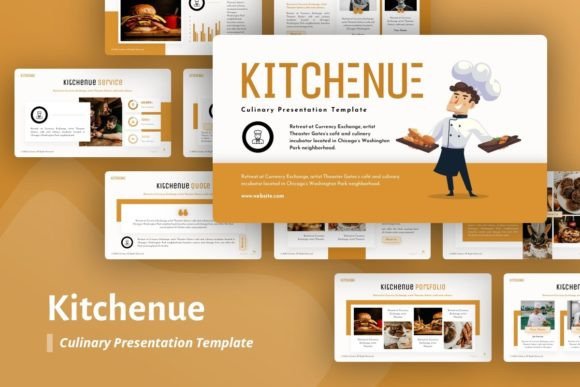
Think of it as a pre-designed, flexible framework for creating presentations. At its core, the Kitchenue Culinary Presentation provides a set of 36 slides, a cohesive visual style with handcrafted infographics, and editable elements tailored for content related to food, cooking, and culinary business. The key is its adaptability. While the aesthetic leans clean and modern, suitable for a high-end restaurant pitch, the structure is completely customizable, making it just as useful for a home baker's portfolio or a food photographer’s client meeting.
Moving Beyond the Basic Slide Deck
Many presentation templates feel generic. You insert your text and images, but the result lacks a professional, industry-specific polish. Kitchenue Culinary Presentation addresses this by being built on master slides and offering pixel-perfect illustrations. This means you maintain a consistent, high-quality look across your entire presentation without needing advanced design skills. The included icons and infographics are vectors, so you can resize them without losing quality and change colors to match your brand instantly.
Real-World Situations Where This Template Comes Alive
Let’s talk about application, not just features. Where would you actually use this?
For the Culinary Entrepreneur and Startup
Imagine you’re pitching your new meal-kit service or artisan food product to investors. You need to explain your market analysis, supply chain, and financial projections. A standard corporate template might feel disconnected from your vibrant product. With Kitchenue Culinary Presentation, you can use its infographic slides to visually break down your recipe sourcing process or illustrate your customer growth journey, all while keeping a culinary aesthetic that makes your presentation feel unified and authentic. The picture placeholder feature, where you can drag and drop your product photos, is a practical godsend during last-minute edits before a pitch.
For the Chef and Restaurant Professional
A chef might use this to present a new menu concept to restaurant owners or to create a training presentation for kitchen staff on new techniques. The clean, readable fonts like Unica One and Josefin Sans ensure text on slides about ingredient provenance or plating techniques is legible and stylish. For a restaurant redesign proposal, the template’s slides can help juxtapose conceptual mood images (using placeholder suggestions for sites like Unsplash) with floor plans and financial forecasts, creating a compelling story for stakeholders.
For Creative Agencies and Food Photographers
This is a powerful tool for showcasing your own services. A creative agency specializing in food branding can use the Kitchenue Culinary Presentation to present a campaign proposal to a client. You can drop your mock-ups directly into the picture placeholders to show how the branding would look across various media. For a food photographer, this template acts as a dynamic portfolio. Instead of a static PDF, you can create an interactive slideshow of your work, organized into categories like "Beverage Photography" or "Editorial Food Stories," with space to include client testimonials or project descriptions on accompanying slides.
For Corporate Teams in the Food Industry
Large companies in the food sector often need internal presentations for product launches, quality assurance reports, or annual reviews. The professional yet approachable design of Kitchenue helps communicate complex data—like sales figures across different regions or new compliance protocols—through its editable infographics, making information accessible to teams from marketing to logistics.
How Different Users Benefit in Different Ways
The beauty of a versatile template like Kitchenue Culinary Presentation is that its value changes depending on who’s using it.
For the Non-Designer: The major benefit is confidence. Having a well-structured starting point with resizable graphics and clear master layouts prevents the anxiety of starting from a blank slide. You focus on your content, not on design alignment.
For the Design-Savvy User: The benefit is speed and foundation. Even a skilled designer can save hours by using this as a base, customizing the editable vectors and color schemes to create a bespoke look quickly, rather than building every slide from scratch.
For the Frequent Presenter: Consistency across multiple presentations—for example, a culinary instructor teaching different courses—builds brand recognition and professional credibility. Using the same template family ensures students or clients recognize your materials instantly.
Common Considerations Before You Dive In
While Kitchenue Culinary Presentation is designed to be helpful, a few practical observations are worth noting. Remember, the demo images shown are from Unsplash and are for preview only; they aren’t included in the files. You’ll need to source your own imagery. This is actually a strength—it forces you to personalize the presentation with your specific photos, product shots, or charts, making the final output uniquely yours.
Also, the template is a PowerPoint (.PPTX) file. It works best within that ecosystem. If your team or clients primarily use other software like Google Slides or Keynote, you'll need to consider conversion, which might affect some of the more intricate design elements like the handcrafted infographics. Always check the included documentation file first—it often contains quick tips for customization and font installation (the template uses Unica One and Josefin Sans) that can smooth the setup process.
Exploring Its Flexibility Across Purposes
Let’s break away from the predictable "features list" and look at scenarios.
- Personal Portfolio: A freelance recipe developer can structure a presentation with a bio slide, a gallery of recipe cards (using the illustration slides), links to published work, and a client testimonial section, creating a more engaging package than a simple resume.
- Pitch Deck: A food tech startup can map the classic pitch deck structure—problem, solution, market, product, business model, team—onto the template's varied slides, using the infographics to visually explain a complex food science innovation.
- Company Profile: A family-owned gourmet food distributor can create a presentation that tells their story, showcases their facility and team, details their product range, and outlines their sustainability practices, all with a cohesive visual thread that feels premium.
The template’s strength lies in this narrative capability. It provides a canvas not just for listing facts, but for telling a story about your culinary project, service, or brand. The 36 slides offer enough variety to avoid repetition, but not so many that you feel overwhelmed by choice.
A Note on Potential Limitations
For users seeking extremely niche or avant-garde culinary aesthetics—say, for a punk-themed bakery or a hyper-abstract food art concept—the clean, modern base of Kitchenue Culinary Presentation might require more extensive customization to match that specific vibe. It’s a professional template, not an art project template. Also, its utility is inherently tied to presentation formats. If your primary need is for long-form documents (like a cookbook manuscript) or single-page flyers, this isn’t the tool for that. It excels specifically in sequential, slide-by-slide storytelling.
Ultimately, the Kitchenue Culinary Presentation template serves as a bridge between your culinary expertise and your audience’s understanding. It removes the technical design hurdle, allowing you to concentrate on crafting your message, knowing the visual framework will support it professionally. Whether you’re explaining a new cooking technique, seeking investment for a food venture, or showcasing your photographic portfolio, it provides a ready-to-use, yet deeply adaptable, starting point to make your case—not just with words, but with a thoughtfully designed visual experience.