The Obigas Google Slides Template: An Evaluation for Professional Presentation Needs
When creating presentations for business or personal projects, the foundation you choose can significantly impact the outcome. A well-designed template saves time, enhances visual communication, and projects professionalism. The Obigas Google Slides Template is one such option, marketed as a clean, scalable, and multipurpose solution. This article provides a balanced evaluation of this template, exploring its features, potential benefits, and considerations to help you decide if it aligns with your specific presentation goals.
What Is the Obigas Google Slides Template?
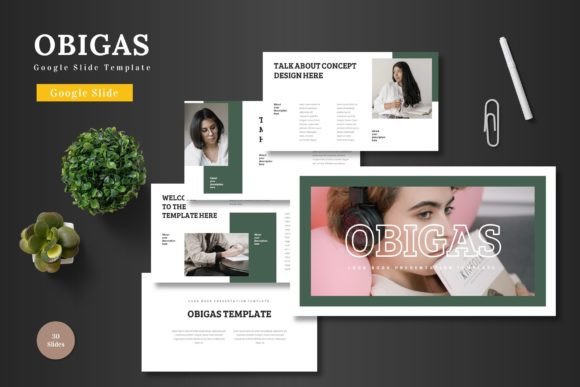
The Obigas Google Slides Template is a pre-designed presentation framework available for use within Google Slides. It is described as a colorful, multipurpose template suitable for various contexts like business pitches, e-commerce showcases, or product promotions. The core proposition is that it provides a fully editable structure within the Google Slides ecosystem, eliminating the need for additional software. Users can input their content, replace images using placeholder areas, modify colors, and utilize included animated slides. The package typically includes 150 total slides distributed across five premade color schemes, with 30 slides dedicated to each color variation. Other noted features include section break slides, handcrafted infographics, pixel-perfect illustrations, resizable graphics, and dedicated gallery or portfolio slides.
Key Features and Potential Benefits
For individuals or teams consistently creating presentations, a template like Obigas offers several practical advantages. The primary benefit is time efficiency. Starting from a blank slide requires designing layouts, choosing color palettes, and creating graphical elements—a process that can consume considerable hours. A comprehensive template provides a ready-made visual system, allowing you to focus immediately on content creation and storytelling.
The promise of all elements being editable directly in Google Slides is a significant consideration. This native compatibility means you avoid the friction of importing files from other design software or dealing with formatting inconsistencies. The drag-and-drop picture placeholder functionality and the ability to change colors based on master slides aim to simplify customization for users with varying levels of design expertise.
The inclusion of 150 slides across five color variations offers breadth and flexibility. Having multiple thematic color schemes (likely within the same folder) allows you to tailor the presentation's mood to your brand or topic without redesigning the entire layout. Features like handcrafted infographics and portfolio slides are targeted benefits for users needing to present data or showcase work in a visually compelling format.
Trade-offs and Important Considerations
While the feature list is extensive, evaluating a template requires weighing its offerings against your actual needs and potential constraints. A large number of slides can be beneficial, but it may also lead to choice overload. Navigating 150 slides to find the right layout can sometimes be as time-consuming as designing a few key slides from scratch. It is crucial to assess whether the template's specific slide types—like the animated slides or section breaks—match your presentation's narrative structure.
The quality of the "pixel-perfect illustrations" and "handcrafted infographics" is a subjective matter. While they provide a starting point, they may carry a distinct stylistic look. If your brand requires a very unique or minimalist aesthetic, these pre-made graphics might need extensive modification or might not fit at all. The scalability claim hinges on these elements being truly resizable and editable without losing visual fidelity, which should be tested upon acquisition.
Another consideration is dependency on the Google Slides environment. If your workflow or client requirements necessitate presentations in PowerPoint (PPTX) format, you would rely on the included PPTX file export. While Google Slides allows export to PowerPoint, subtle formatting differences can sometimes occur. Evaluating the provided "5 PPTX Item From Googleslides" for compatibility is a prudent step if PowerPoint delivery is a firm requirement.
Situations Where the Obigas Template Is a Strong Fit
The Obigas Google Slides Template appears particularly suited for certain scenarios. It could be a strong fit for small business owners, startup teams, or freelancers who need to create polished presentations regularly but lack dedicated graphic design resources. The multipurpose nature and business/pitch deck orientation directly serve these use cases.
It may also align well with users who have established content but need to elevate its visual presentation. For example, someone with a solid product description, business plan, or portfolio images could use this template as a quick visual container to improve professionalism and audience engagement.
Furthermore, teams that operate collaboratively within Google Workspace might benefit. Since editing is confined to Google Slides, team members can simultaneously access and edit the presentation without specialized design software licenses, facilitating a smoother collaborative process.
When Alternatives Might Be Worth Considering
Despite its offerings, alternatives to the Obigas template should be considered in specific situations. If your needs are hyper-specialized—for instance, a scientific conference presentation requiring specific diagram types or a legal document with minimal graphics—a more niche template or a custom design might be more effective.
Users with advanced graphic design skills and access to professional software (like Adobe Creative Suite) might find starting from a blank canvas or using more foundational design kits gives them greater creative control and originality, avoiding the potential "template look" that some pre-designed systems can impose.
Additionally, if your primary output format is consistently PowerPoint and you work extensively with its advanced features (like intricate animations or morph transitions), investing in a high-quality template built natively within PowerPoint might offer better reliability and deeper functionality.
Aligning the Template with Your Goals
To determine if the Obigas Google Slides Template is right for you, conduct a simple audit of your presentation needs. List the types of presentations you create most often (e.g., investor pitches, internal reports, product launches). Then, review the template's advertised features, like its gallery slides for portfolios or infographics for data, and see if they map directly to your content requirements. Consider your design proficiency; if you need a system that guides you with placeholders and color schemes, this template could be helpful. If you require extreme customization, it might be a starting point but could require significant alteration.
Evaluating Value and Efficiency
The value proposition centers on saving design time and achieving visual consistency. Estimate the hours you typically spend designing presentation decks. If the template's structure can reduce that time considerably while improving output quality, it represents a good efficiency gain. However, factor in the potential time needed to learn and adapt to the template's own system. Finally, always verify the practical details: ensure the provided files (like the font and photo information readme) are complete and that the template functions as expected within your version of Google Slides before fully committing to its use for a critical project.
In conclusion, the Obigas Google Slides Template is a comprehensive, multipurpose tool designed to streamline presentation creation within the Google ecosystem. Its potential for time savings and visual enhancement is clear, particularly for business contexts and users without dedicated design support. However, its fit depends entirely on the alignment between its pre-designed style and slide types with your specific content, brand aesthetic, and output requirements. By carefully evaluating your needs against its features and considering the trade-offs involved, you can make an informed decision on whether this template serves as a valuable asset in your communication toolkit.